Posts

Showing posts with the label Waikato War

2024 Talks and Events

Image
In the past year I have taken part in a number of different talks and other events alongside other participants. Here I post links to those available online, organised chronologically. In February I took part in a podcast with Phil Quinn and Shane Te Pou ahead of Waitangi Day.      In March I took part in a webinar for the Tiriti-Based Futures online symposium alongside Dr Liana MacDonald and Richard Crawford on 'Aotearoa New Zealand Histories: Diving into a Contested Past'.   In April 2024 I gave a seminar as part of the induction day for new Fellows of the Royal Society Te Apārangi alongside 21 other Ngā Ahurei a Te Apārangi Fellows and Ngā Ahurei Honore a Te Apārangi Honorary Fellows elected to the Academy of the Royal Society Te Apārangi in its 2023 intake.   In September I appeared on The Hoon with Bernard Hickey and Peter Bale . In September I also appeared on RNZ Afternoons show hosted by Jesse Mulligan for the Bookmarks segment . Also in September, I ...

Book Event: The Invasion of Waikato/Te Riri ki Tainui

Image
Date/time : Thursday, 24 October 2024, 5.30pm - 8.30pm Bridget Williams Books invites you to an event in Wellington to mark the arrival of Vincent O’Malley’s latest book ' The Invasion of Waikato/ Te Riri ki Tainui' . Thursday 24 October Public Trust Hall 131-135 Lambton Quay Wellington Doors open from 5.30pm, event starts 6.00pm This event takes place in the lead-up to Rā Maumahara, the National Day of Commemoration for the New Zealand Wars, observed on Monday 28 October. Nau mai, haere mai. Public event, no RVSP needed. https://www.facebook.com/events/2217759985273465/   For further news and reviews see the book page . Watch the trailer for  The Invasion of Waikato/Te Riri ki Tainui:

The Invasion of Waikato/Te Riri ki Tainui

Image
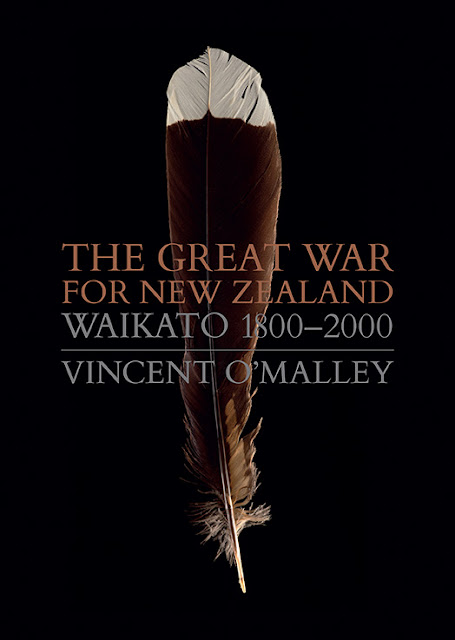
The Invasion of Waikato/Te Riri ki Tainui , to be released late in August 2024, provides a new and concise account of this defining event in Aotearoa New Zealand history. The following outline is taken from the book page on the Bridget Williams Books website.   The Waikato War is a pivotal event in the history of Aotearoa. In this accessible introduction, Vincent O’Malley explains the enduring impact of these conflicts, continuing his remarkable work on the New Zealand Wars. The book begins with the 1863 crossing of the Mangatāwhiri River by British troops. This act marked the Crown’s declaration of war against the Waikato tribes, igniting a conflict with far-reaching consequences. At its heart, the war was a clash between the Crown’s push for control and Māori insistence on self- governance, a right affirmed in Te Tiriti o Waitangi. The resulting conflict has shaped the nation for over a century, more influential, O’Malley argues, than even New Zealand’s involvement...

Recent New Zealand History Talks

Image
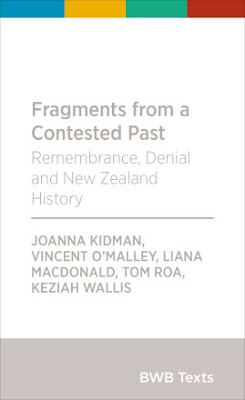
Event: Auckland Writers Festival Event: Past and Present Date: Friday 26 August 2022 Summary: Sociologist Joanna Kidman (Ngāti Maniapoto, Ngāti Raukawa) and historian Vincent O’Malley make a formidable team, as partners in life and scholarship. They both contributed to the recently published Fragments from a Contested Past: Remembrance, Denial and New Zealand History , and co-lead the Marsden Fund project – He Taonga te Wareware?: Remembering and Forgetting Difficult Histories in Aotearoa New Zealand – a three-year study into how the 19th-century NZ Wars have shaped memory, identity and history.  O’Malley is a founding partner of HistoryWorks and the author of the 2022 Ockham NZ Book Awards General Non-Fiction winner Voices from the New Zealand Wars | He Reo n ō ng ā Pakanga o Aotearoa . Kidman is a Professor of Sociology with a particular interest in youth movements and higher education. They speak with Dale Husband about their writing, passions and collaborations.   ...

Contesting the Past: Remembrance, Denial and New Zealand History

Image
History has rarely felt more topical or relevant as, all across the globe, nations have begun to debate who, how and what they choose to remember and forget. From the removal of the statue of Captain Hamilton formerly displayed in the centre of the city that bears his name, to the renaming of sites that recall colonial violence such as Von Tempsky Street and the town of Maxwell north of Whanganui, on the 159th anniversary of the British Army's invasion of the Waikato, Vincent O'Malley discusses how we remember and forget our own history.  Read more in recent BWB Text  Fragments from a Contested Past: Remembrance, Denial and New Zealand History , co-authored by Joanna Kidman, Vincent O'Malley, Liana MacDonald, Tom Roa and Keziah Wallis. Where:  New Zealand Fabian Society 2/57 Willis Street, Wellington (take the lifts behind Unity Books - to the second floor). When: 5.30pm, Tuesday 12 July 2022   Visit the Fabian Society website to register to attend in pe...

AMI Humanities Lecture: The Great War for New Zealand and the Making of Auckland

Image
In the inaugural Auckland Museum Institute Humanities Lecture for 2022, Dr O’Malley describes how the Great War for New Zealand, begun from the invasion of Waikato in 1863, played out in Tāmaki Makaurau, and the legacy it left behind. In his acclaimed 2016 book   The Great War for New Zealand , Dr Vincent O’Malley argued that it was in the invasion of Waikato in 1863, and not either world war, that was the defining conflict in New Zealand history. War in the Waikato shaped the nation in many ways and caused incalculable misery and lasting harm for many Māori communities. But as the same book highlighted, it also sealed Auckland’s future. In this lecture, O’Malley describes how the conflict played out in Tāmaki Makaurau and the legacy it left behind. Vincent O’Malley is the author of many books on New Zealand history including bestselling works   The Great War for New Zealand: Waikato 1800–2000   (2016) and   The New Zealand Wars / Ngā Pakanga o Aotearo...

Teaching Aotearoa New Zealand Histories

Image
Aotearoa New Zealand has come a long way in the past few years in its efforts to engage with its history in a more upfront and honest manner. For those of us who have campaigned for such a change, this is not before time. This new-found willingness to move beyond a rose-tinted approach to the nation’s past in which anything uncomfortable or considered to reflect poorly on the Pākehā majority is shunned and ignored has taken considerable effort and is still very much a work in progress. Confronting the often bloody and brutal realities of colonial dispossession of Māori has come as a shock for many non-Māori New Zealanders brought up to believe that they lived in a country with the greatest ‘race relations’ in the world. A more robust and truthful understanding of that history is to a large degree dependent on the education system. And while there is good news on this front, it is easy to lose sight of the fact that the campaign has been a long and at times difficult one.   ...

Remembering and Forgetting Difficult Histories: The New Zealand Wars

Image
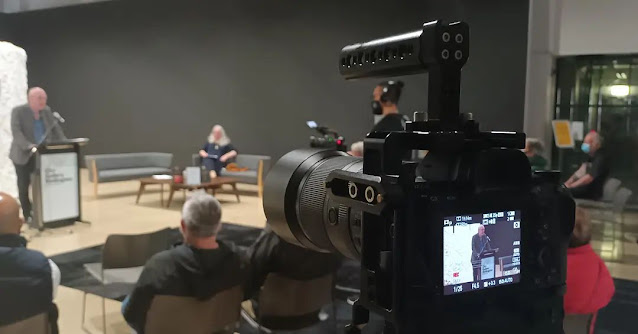
In October 2021, Professor Joanna Kidman and I gave a talk at City Gallery , Wellington, on ‘Remembering and Forgetting Difficult Histories: The New Zealand Wars’.   City Gallery Talk (photo: Story is King Media) The talk, delivered in conjunction with Brett Graham’s extraordinary Tai Moana Tai Tangata exhibition, draws on research conducted for our Marsden Fund project on how the New Zealand Wars are remembered and forgotten.   Brett Graham, Vincent O'Malley and Joanna Kidman pictured in front of Cease Tide of Wrong-Doing, part of Brett Graham: Tai Moana Tai Tangata, Govett-Brewster Art Gallery, New Plymouth As we noted in the abstract for the event, si tes of enormous violence can be places of memory embedded in the land, but also of silence and forgetting. The ‘difficult histories’ of the New Zealand Wars are remembered by Māori through many forms – including art and sculpture, while ignored, or at best, mythologised by many Pākehā. The talk took place in ...

NZ Wars: Stories of Tainui

Image
Following on from the award-winning NZ Wars: The Stories of Ruapekapeka and NZ Wars: Stories of Waitara , NZ Wars: Stories of Tainui was released earlier this year.  Produced by Great Southern Television and Aotearoa Media Collective for RNZ, and presented by Mihingarangi Forbes, NZ Wars: Stories of Tainui tells the of the invasion of 1863 invasion of Waikato, a defining moment in Aotearoa New Zealand history. Centred on three key encounters; Rangiriri, Rangiaowhia and Ōrākau NZ Wars: Stories of Tainui is a bicultural retelling of “the biggest and most important campaign of the 19th century New Zealand Wars”.  The documentary recaps the events which led to the invasion of the Waikato and examines its consequences for future generations of New Zealanders.       Besides the documentary itself, extended interviews are also available to view with leading Tainui tribal historians Rahui Papa, Brad Totorewa, Tom Roa, Mamae Takerei and Kawhia Muraahi, along wit...

Frontier Town: History, Memory and Myth on the King Country Aukati

Image
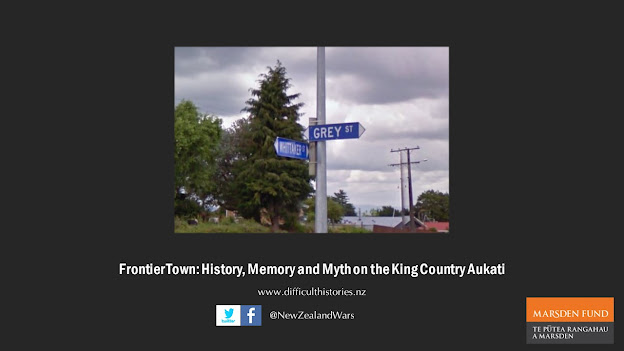
Earlier this month, I gave a webinar as part of the University of Auckland History Department's 2020 seminar series. Because this was delivered online, it was possible to record the session, which has since been made available to view . Abstract: Today, the street signs pay silent homage to the Pākehā politicians and soldiers responsible for its conquest and confiscation in the Waikato War of 1863-64. Grey, Cameron, Carey, Whitaker and other streets in the small Waikato town of Kihikihi taunt its many Māori residents with daily reminders of the devastating effects and consequences of that conflict felt over many generations. Drawing on research for a Marsden Fund project documenting how the New Zealand Wars are remembered and forgotten, this seminar traces the intersections of history, memory and myth in this Waikato frontier town.    Watch the video here:  

Street Talk: History, Myth and Memory on the Waikato Frontier

Image
The New Zealand Journal of Public History has just published a special issue devoted to the theme of history and reconciliation. Leah Bell's contribution, 'Difficult Histories' , based on her presentation to the New Zealand Historical Association conference at Victoria University of Wellington in November 2019, is essential reading. Leah presented this as part of a roundtable session for the Marsden Fund project that I am co-Principal Investigator on (with Professor Joanna Kidman), on how the New Zealand Wars have been remembered and forgotten.   My own contribution to the NZJPH special issue explores the intersection of history, memory and myth on the Waikato frontier.  It focuses on the small rural town of Kihikihi, just inside the 1.2 million acre area confiscated by the Crown in the wake of its invasion of Waikato in 1863, the Puniu River southern boundary of which also served as the northern aukati line marking the limits of the King Country district that Māori surv...

National Portrait

Image
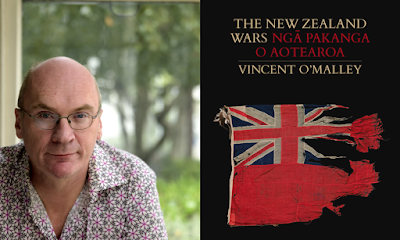
The following extract comes from a portrait written by Philip Matthews and published by Stuff in May 2019. xxxxxxxxxxx New Zealand is slowly emerging from its amnesia about the 19th-century New Zealand Wars – we used to call them the Māori Wars or the Land Wars – and O'Malley is at least partially responsible for that. His monumental 2016 book about the 1863-64 war in Waikato, The Great War for New Zealand , has now been followed by a smaller, more accessible, illustrated account, The New Zealand Wars Ngā Pakanga o Aotearoa . Ever wondered about the wars and why they happened? This is the ideal place to start.       Essentially, the New Zealand Wars stretched across nearly 30 years, from 1845 to 1872, ranging from the Bay of Islands in the north to Wairau, near Blenheim, in the south, with a lot of action in Waikato and Taranaki. Some individual stories are better known than others: the messianic defianc...

Talking New Zealand History

Late last year Vaughan Rapatahana conducted an interview with me for Scoop Review of Books.    Kia ora Vincent. T ē n ā koe m ō t ā u pukapuka. Ka nui te pai t ē nei mahi. VR:  Let’s start at the top. The Great War for New Zealand: Waikato 1800 -2000 is a massive book and a mighty indictment of the ways in which P ā keh ā grabbed the land off and of M ā ori; a systematic snatching that of course has had and continues to have serious ramifications for many M ā ori today. What are the positive flow-on effects stemming from this important book, that you are experiencing yourself? Vincent : The response to the book has been phenomenal right from the day we launched it back in October 2016. That was at the Waahi Pā poukai in Huntly. I handed over the first official copy to Kīngi Tuheitia and wandered around the back of the whare where a big crowd was gathering. I wondered what was happening. It turned out they were already queuing to get their own c...

The Waikato War and Auckland

Image
Last month I spoke at the Hauraki Gulf Marine Park seminar, held at Auckland Museum, on how the Waikato War helped transform Auckland and the wider Hauraki Gulf. Auckland, I suggested, is a city built on immense Māori contributions, even if this history is not widely known or understood today. Watch the video of my talk here.

Grey Street Must Fall: The Waikato Garrison Towns in History and Memory

Image
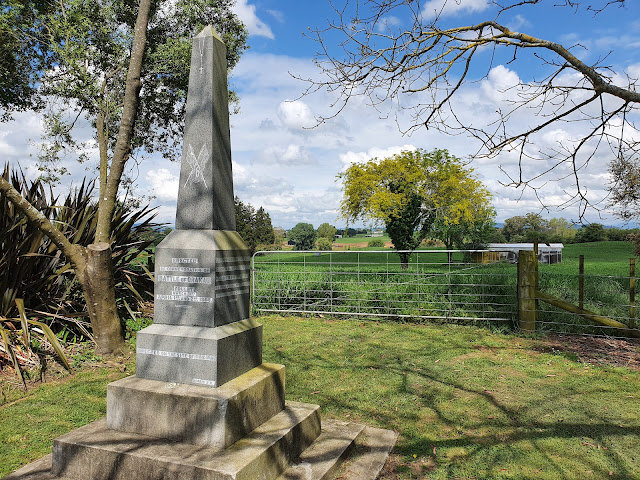
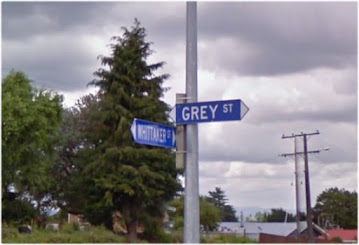
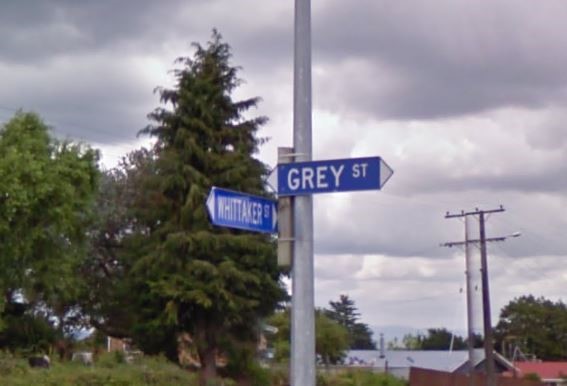
In December 2017 I had the pleasure of addressing the two-day 'Garrison Towns in the Nineteenth Century Empire' symposium hosted at Victoria University of Wellington as part of the Marsden Fund project Soldiers of Empire . My contribution considered the garrison towns of the Waikato district along what became the boundary between the area conquered and seized by invading British and colonial troops after April 1864 and the Kīngitanga territory to the south of this, beyond the Puniu River. A particular focus was the town of Kihikihi, which continues to have a disproportionately large Māori population today in comparison with other settlements in the region.      Corner of Whitaker and Grey Streets, Kihikihi. Named after Frederick Whitaker and Sir George Grey respectively   Abstract:   Today, the street signs pay silent homage to the Pākehā politicians and soldiers responsible for its conquest and later confiscation in the Waikato War of 1863-6...