Posts

Grey Street Must Fall: The Waikato Garrison Towns in History and Memory
Image
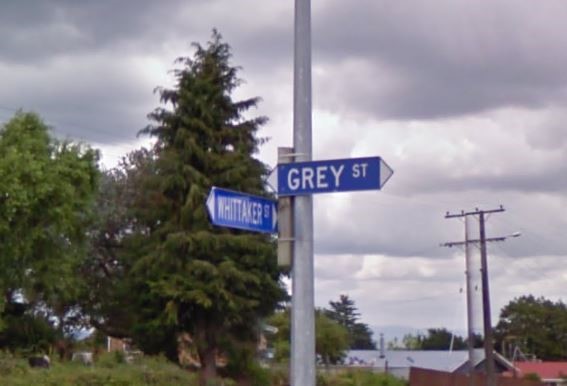
In December 2017 I had the pleasure of addressing the two-day 'Garrison Towns in the Nineteenth Century Empire' symposium hosted at Victoria University of Wellington as part of the Marsden Fund project Soldiers of Empire . My contribution considered the garrison towns of the Waikato district along what became the boundary between the area conquered and seized by invading British and colonial troops after April 1864 and the Kīngitanga territory to the south of this, beyond the Puniu River. A particular focus was the town of Kihikihi, which continues to have a disproportionately large Māori population today in comparison with other settlements in the region.      Corner of Whitaker and Grey Streets, Kihikihi. Named after Frederick Whitaker and Sir George Grey respectively   Abstract:   Today, the street signs pay silent homage to the Pākehā politicians and soldiers responsible for its conquest and later confiscation in the Waikato War of 1863-6...

Questioning the Canon: Colonial History, Counter-Memory and Youth Activism

'Questioning the Canon: Colonial History, Counter-Memory and Youth Activism' , co-authored with Dr Joanna Kidman from Victoria University of Wellington, was recently published in its online version in the journal Memory Studies . Abstract: Social memory is inscribed by power relations that both produce and contain canonical state narratives. In settler nations, where indigenous and state relationships remain unresolved, tribal memories of violent colonial histories that are passed on to successive generations expose ‘official’ silences in foundational stories about a nation’s origins. In this article, we examine a public debate that occurred when a group of secondary school students took a petition to the New Zealand Parliament calling for formal recognition of the difficult history of the New Zealand Wars – a series of nineteenth-century clashes between British imperial troops and their colonial allies against indigenous Māori. Drawing on Hirsch’s concept of ...

'The Great War for New Zealand' at the New Zealand Festival

Image
The Great War for New Zealand to feature at the New Zealand Festival Writers and Readers weekend: This country’s most significant and traumatic conflict, crucial in shaping the nation, was the 1863–64 war between Māori and British troops in the Waikato. In his ground-breaking, monumental work The Great War for New Zealand: Waikato 1800–2000 , historian Vincent O’Malley explores Māori and Pākehā relationships from first contact to settlement and government apology. He discusses his research with “artivist” Moana Maniapoto , musician and writer for e-Tangata .   Where: New Zealand Festival Club , 17 Cable Street, Wellington 6011 When: 4.15-5.15pm, Saturday, 10 March 2018 Ticketing and more information:  https://www.festival.co.nz/2018/events/defining-nation/

NZ Historical Association Mary Boyd Prize 2017

It was a great honour to have been announced as the 2017 winner of the Mary Boyd Prize at the New Zealand Historical Association’s conference in Auckland in December. Named in memory of the Pacific historian Mary Beatrice Boyd (1921–2010), this award is for the best article on any aspect of New Zealand history published in a refereed journal. The prize covered articles published between April 2015 and April 2017. My winning article, ‘“Recording the Incident with a Monument”: The Waikato War in Historical Memory’, was published in the open-access Journal of New Zealand Studies in 2015. The article charts changing perceptions of the Waikato War in national memory and consciousness and formed the basis for a chapter on this topic in my subsequent book The Great War for New Zealand . Read the wining article here .

'The Great War for New Zealand' at Hamilton Gardens Arts Festival

Image
Vincent O’Malley is a professional historian and partner in the Wellington research consultancy HistoryWorks. He has published widely on New Zealand history, including the critically-acclaimed The Great War for New Zealand: Waikato 1800-2000 (Bridget Williams Books), which was named New Zealand Herald book of the year for 2016. WHEN Saturday 17 Feb, 5:00 pm WHERE Chinoiserie Garden (CG) ADMISSION $15 General Admission $13 Concession (Student, 65+) $14 Early Bird (before 22 Dec) For more information or to book tickets, visit https://hgaf.co.nz/sessions/vincent-omalley/ FB event page: https://www.facebook.com/events/358234037922361/

Remembering the Northern War

Image
The battle of Ruapekapeka, fought in January 1846, was the final engagement in the war that Britain lost, as James Belich famously described it. But whether that means Ngāpuhi won the Northern War that had begun nine months earlier is in some ways a moot point. After 1846 the Crown turned its back on the north, which was left to become a backwater as the rest of the New Zealand economy boomed. Arguably, it has never really recovered. And so the story of the war is one of neglect, but also of remembering those who died in the conflict and the enormous damage it caused. It is said that many generations of Ngāti Manu women have been named Te Noota, after HMS North Star, the naval vessel that destroyed their pā at Ōtuihu on 30 April 1845. The conflict also serves as a reminder of the remarkable leaders from this period and their efforts to protect and defend their rangatiratanga. And that is relevant today as Ngāpuhi contemplate a path ahead with their Treaty sett...

'The Great War for New Zealand' at Tauranga Arts Festival

Image
The Waikato War was the defining conflict in New Zealand history, says historian Vincent O’Malley in his seminal new work. It was a war that inflicted a huge number of casualties (more per capita than World War 1), destroyed a thriving regional economy and set back Māori-Pakeha relations by generations. His bold, new work The Great War for New Zealand: Waikato 1800-2000 , has been acclaimed by Māori and Pakeha. Here, O’Malley discusses the book with Guyon Espiner.   When: Saturday, 28 October 2017 Where:  Carrus Crystal Palace, Tauranga Waterfront Tickets:  www.taurangafestival.co.nz/writers/the-great-war-for-nz-vincent-omalley-216 See also: ' Our Place to Stand ' Six speakers have 7 minutes each to explore what it means to be a New Zealander, whether by birth or adoption, and the identity that comes with breathing the air of this chain of islands between Polynesia and Antarctica. Their notion of tūrangawaewae – places where we feel especially empow...