Posts

New Zealand Wars, Land Wars, or Māori Wars?
Image
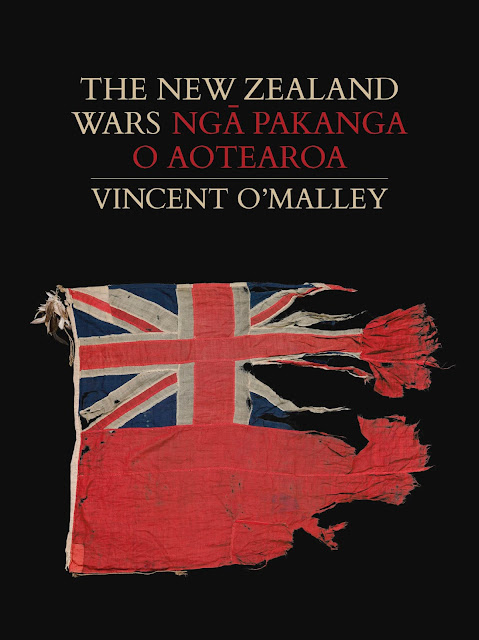
The following extract from The New Zealand Wars/Ngā Pakanga o Aotearoa first appeared in E-Tangata What historians and others have called the wars has changed over time. Why is this of interest? Do names really matter? Well, they do because they convey key messages about the nature of the wars, their causes and participants. For a long time, it was common to refer to this series of conflicts as “the Māori Wars”. That was consistent with the British tendency to name wars after their enemies; for instance, the Boer War, the Zulu War, or the Indian Mutiny. But there are some obvious problems with such a label. For a start, it tends to sheet home responsibility for the wars to Māori, rendering the other combatants invisible. In the 1960s, some historians tried to correct this by adopting the label “the Anglo–Māori Wars”. But this is also a problem, in that some Māori fought on the “Anglo” (that is, British or Crown) side. And given estimates that up to 40 per cent of ...


The New Zealand Wars/Ngā Pakanga o Aotearoa

Image
From the BWB webpage for my forthcoming new history of the New Zealand Wars: The New Zealand Wars were a series of conflicts that profoundly shaped the course and direction of our nation’s history. Fought between the Crown and various groups of Māori between 1845 and 1872, the wars touched many aspects of life in nineteenth century New Zealand, even in those regions spared actual fighting. Physical remnants or reminders from these conflicts and their aftermath can be found all over the country, whether in central Auckland, Wellington, Dunedin, or in more rural locations such as Te Pōrere or Te Awamutu. The wars are an integral part of the New Zealand story but we have not always cared to remember or acknowledge them. Today, however, interest in the wars is resurgent. Public figures are calling for the wars to be taught in all schools and a national day of commemoration was recently established. Following on from the best-selling The Great War for New Zealand , ...

Michael King Memorial Lecture: Auckland Writers Festival

Image
Although the New Zealand Wars (1845-1872) have profoundly shaped our country they have been little acknowledged, taught and understood. Historian Vincent O’Malley presents an introduction to the causes, course and consequences of these defining conflicts fought between groups of Māori and the Crown in his book The New Zealand Wars: Ngā Pakanga O Aotearoa . He delivers the 2019 Michael King Lecture .   Historian and founding partner of research consultancy HistoryWorks, Dr Vincent O’Malley is the author of The New Zealand Herald Book of the Year 2016 and Ockham NZ Book Awards 2017 longlisted book The Great War for New Zealand , and new title The New Zealand Wars .

Talking New Zealand History

Late last year Vaughan Rapatahana conducted an interview with me for Scoop Review of Books.    Kia ora Vincent. T ē n ā koe m ō t ā u pukapuka. Ka nui te pai t ē nei mahi. VR:  Let’s start at the top. The Great War for New Zealand: Waikato 1800 -2000 is a massive book and a mighty indictment of the ways in which P ā keh ā grabbed the land off and of M ā ori; a systematic snatching that of course has had and continues to have serious ramifications for many M ā ori today. What are the positive flow-on effects stemming from this important book, that you are experiencing yourself? Vincent : The response to the book has been phenomenal right from the day we launched it back in October 2016. That was at the Waahi Pā poukai in Huntly. I handed over the first official copy to Kīngi Tuheitia and wandered around the back of the whare where a big crowd was gathering. I wondered what was happening. It turned out they were already queuing to get their own c...

Raupatu and Remembrance: The New Zealand Settlements Act

Image
When dates were being considered for the first Rā Maumahara commemorating the New Zealand Wars one suggestion that was floated was 3 December. It does not mark the anniversary of any particular battle or conflict. Instead, on this day in 1863 Governor George Grey signed into law the New Zealand Settlements Act, an innocuous-sounding piece of legislation that was to have devastating consequences for many Māori communities. The Settlements Act provided the primary legislative mechanism for raupatu – sweeping land confiscations that were supposedly intended to punish acts of ‘rebellion’ while also recouping the costs involving in fighting the wars. It declared that where ‘any Native Tribe or Section of a Tribe or any considerable number thereof’ had committed acts of ‘rebellion against Her Majesty’s authority’ since 1 January 1863 their lands could be declared subject to the Act and seized for the purposes of settlement. It was part of a package of measures passed by the all-Pākeh...

The New Zealand Wars and the School Curriculum

Image
By Joanna Kidman and Vincent O'Malley The New Zealand Wars (1845-72) had a decisive influence over the course of the nation’s history. Yet Pākehā have not always cared to remember them in anything approaching a robust manner, engaging at different times either in elaborate myth-making that painted the wars as chivalrous and noble or, when that was no longer tenable, actively choosing to ignore them altogether. More recently there are signs of a greater willingness to face up to the bitter and bloody realities of these conflicts. For many Māori, that is not before time. If a turning point in Pākehā remembrance could be identified, then perhaps it might be the petition organised by students from Ōtorohanga College that led to a national day of commemoration for the New Zealand Wars (Rā Maumahara). In 2014, students from the school, some as young as 15, visited nearby Ōrākau and Rangiaowhia. The group was led by kaumātua who were descendants of the survivors. At e...

Defining Conflicts? The New Zealand Wars

Image
In this Friends of the Turnbull Library event, Dr Vincent O’Malley , author of The Great War for New Zealand: Waikato 1800-2000 , will present an overview of the New Zealand Wars – a series of conflicts that profoundly shaped the course and direction of our nation’s history. He looks at the origins, causes and consequences of these conflicts and discusses how the wars have been remembered historically. Vincent has recently received a Friends of the Turnbull Library research grant to help him research his latest book project, a history of the New Zealand Wars aimed at the secondary school market. 5.30 pm, Thursday 22 November Ground Floor, National Library of New Zealand Corner of Aitken and Molesworth streets Thorndon, Wellington Webpage: https://natlib.govt.nz/events/defining-conflicts-the-new-zealand-wars-november-22-2018