Posts

Gate Pā and the Māori Rules of War

Image
The New Zealand Wars fought between 1860 and 1872 were a time of acute tension and conflict in the nation’s history. But the wars were not without genuine examples of mutual respect among the contending Māori and British troops, along with occasional acts of great compassion and kindness towards enemy fighters. In the Tauranga district a remarkable document that bore some striking similarities with the First Geneva Convention signed months later in Switzerland also emerged during this period. In January 1864 several hundred British troops landed at Tauranga in response to reports that local iwi were providing support to Waikato Māori who had been under attack since July 1863. It soon became apparent that the war was almost certain to spread to Tauranga. Local chiefs accordingly issued a series of challenges to the British, in accordance with Māori beliefs that fighting should be conducted in an open, honourable and brave manner. Along with these invitations to fight ca...
Waitangi Tribunal 40th Anniversary, 1975-2015

Image
The Waitangi Tribunal has released a special edition of its Te Manutukutuku newsletter marking the 40th anniversary of the Tribunal’s founding in 1975. The special edition features articles and interviews from thirty current and former participants in the Waitangi Tribunal’s process, including Tribunal members, iwi leaders, historians and lawyers. Contributors include former chairperson Sir Edward Taihukurei Durie, former chairperson Justice Joe Williams, the Minister of Māori Development the Honourable Te Ururoa Flavell, former Māori Party co-leader the Honourable Dame Tariana Turia, former chairperson of the Ngāi Tahu Māori Trust Board Sir Tipene O’Regan, and lawyer Annette Sykes. Justice Joe Williams (left) and Sir Edward Taihukurei Durie (source: teara.govt.nz) I was also asked to contribute and noted as part of my piece the importance of ensuring that the research commissioned for the Tribunal process is made accessible to iwi and the wider public. While the Tr...

Waitangi Rua Rautau Lectures 2016

Image
I was recently one of a number of speakers at the Waitangi Rua Rautau Lectures for 2016, held at Victoria University of Wellington's Te Herenga Waka Marae. After the first address from Rotorua mayor Steve Chadwick discussing the council's recent partnership agreement with Te Arawa, the second part of proceedings focused in particular on the role of historians in the Waitangi Tribunal process. My own talk was a tribute to the late Professor Alan Ward, who passed away in December 2014. As I noted, I first met Alan in 1993, when I came to Wellington from Christchurch on a three-month contract to research claims for the Crown-Congress Joint Working Party, where Alan was the chief historian. Within six months of that, the CCJWP was defunct, but more than two decades later I'm still here doing more or less the same thing. And although there were times after that when we had less to do with one another, Alan and I worked closely together again on his final major publication, jo...

Book Review: Hazel Petrie, "Outcasts of the Gods? The Struggle over Slavery in Māori New Zealand"

Image
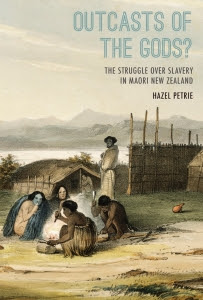
[The following review was first published in Metro magazine, October 2015.] For most people slavery conjures up images of cotton fields and sugar plantations, capricious white masters, whippings and abject cruelty. Hazel Petrie’s new history of Māori captivity opens with Jake the Muss from Once Were Warriors blaming his own violent tendencies on 500 years of slavery and humiliation. Meanwhile, wife Beth observes that ‘Us Maoris used to practise slavery just like them poor Negroes had to endure in America’. It is a common assumption. Except the reality, as Petrie succeeds in showing, was considerably different. Although some Europeans then and now liked to claim that Māori customs such as slavery were ended as a result of exposure to a superior civilisation, the evidence suggests quite a contrary and surprising chain of influence. Once missionaries set up shop in northern New Zealand from 1814 onwards, they attracted whalers and others to the area, most of whom willingly ...